Your Cart

Nothing here yet
The commissary is stocked and waiting. Browse the store to add items.
Nothing here yet
The commissary is stocked and waiting. Browse the store to add items.
From the Kitchens of La Conquistadora
Two kitchens. Two traditions. One ranch.
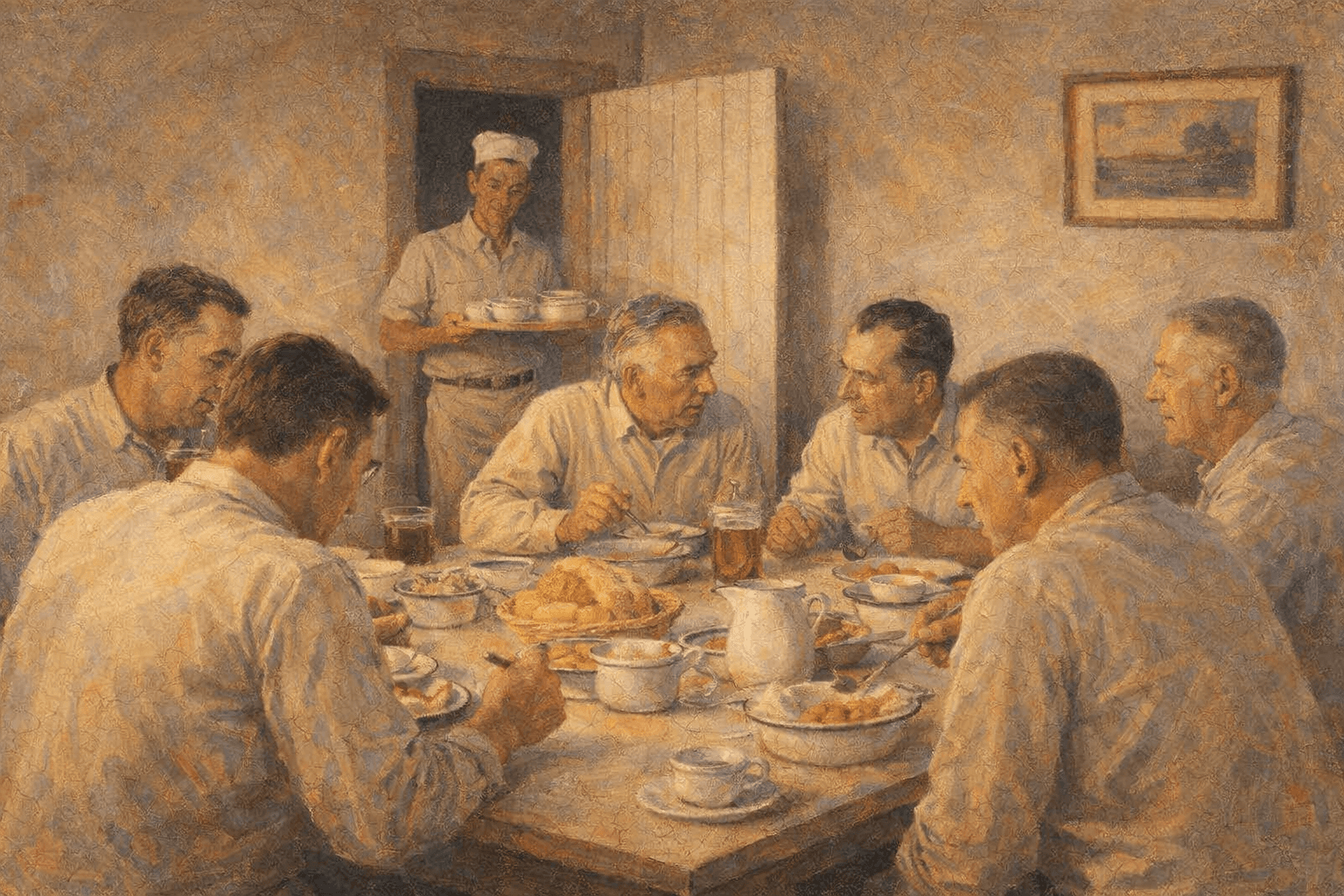
At La Conquistadora, there were always two kitchens. The chuck wagon, where Ignacio fed thirty cowboys three meals a day over open fire. And the headquarters kitchen, where Rufina cooked the New Mexican food her family had made for generations — red chile, green chile, tamales, posole, and the bizcochitos she baked every Christmas. Both traditions lived under the same sky. Now they live in two cookbooks.
“Your father loves you. Do not let your brother touch my Dutch oven.”
Ignacio was the chuck wagon cook on La Conquistadora for over thirty years. He fed cowboys in every kind of weather, on every kind of ground, with whatever he could carry in the wagon or find along the way.
These are his recipes — adapted for modern kitchens, with the original campfire method alongside every recipe for those who want to cook the way Ignacio did.
Sourdough biscuits, camp coffee, cowboy eggs, and the kind of breakfast that keeps a man in the saddle until noon.
Son-of-a-gun stew, campfire chili, chicken-fried steak, and the meals Ignacio served from the tailgate when the crew was too far from headquarters to come in.
Dutch oven pot roast, beef ribs slow-cooked over mesquite, carne adovada, and the suppers that brought the whole outfit to the fire.
The cobbler. The biscuit recipe cowboys would fight over. Camp bread baked in a Dutch oven. The things that made Ignacio a legend on four ranches.
Bear sign doughnuts, vinegar pie, spotted pup rice pudding, and the things Ignacio mixed when a man needed fixing more than feeding.
Son-of-a-gun in a sack, carne seca, and the adventurous cuts and methods from the trail drives. Not for the faint of heart or the squeamish of ingredient.
eBook available on this site at launch. Hardcover available on Amazon.
“The red or the green, mija. In this house, that is the only question that matters.”
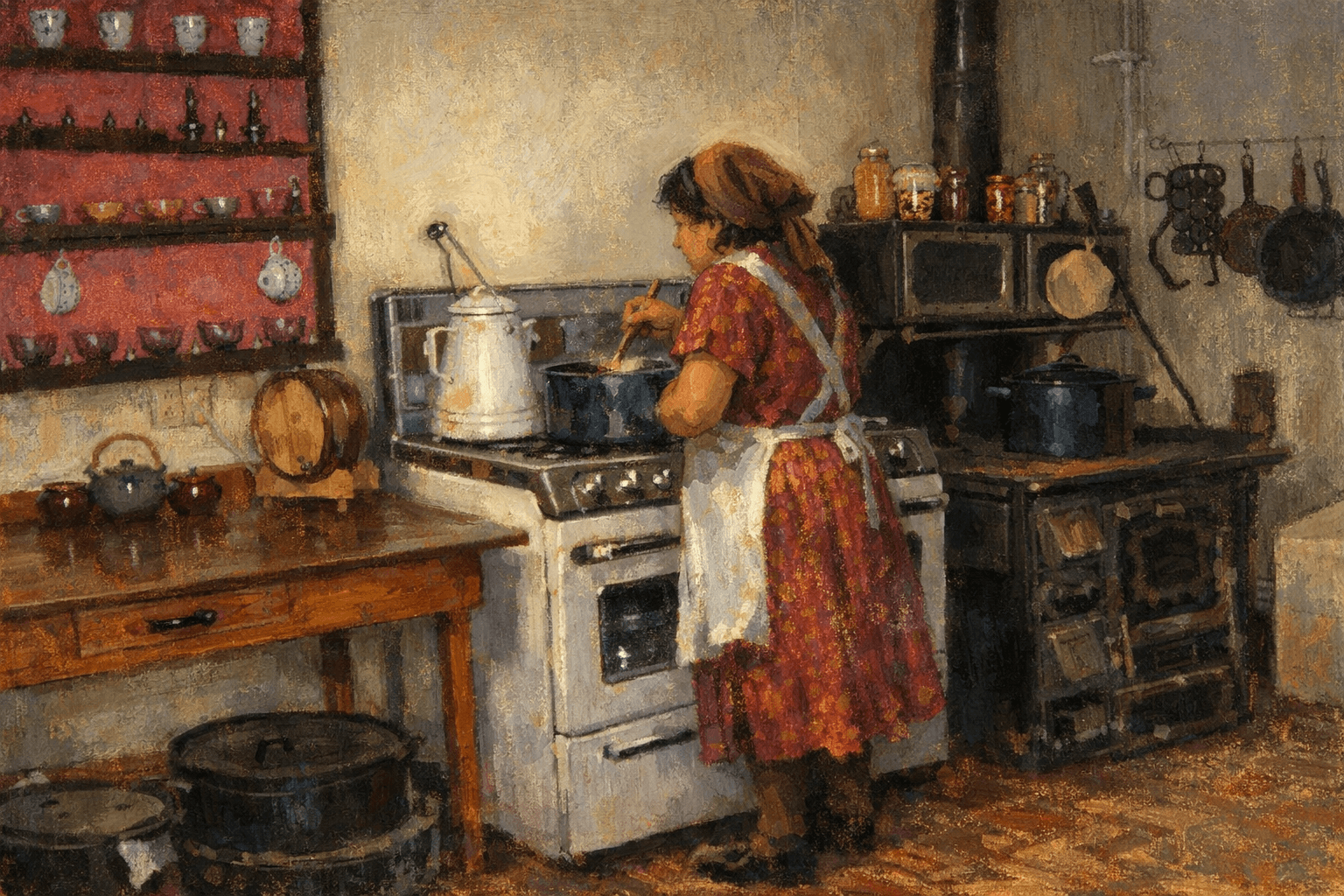
Rufina ran the headquarters kitchen at Casa Blanca for as long as anyone could remember. While Ignacio fed the cowboys on the range, Rufina fed the family and anyone else who came through the door — ranch hands, neighbors, the vet, the priest, whoever showed up hungry.
Her food was New Mexican to the bone — chile sauces red and green, tamales at Christmas, posole on cold nights, sopaipillas with honey for the children. She cooked the way her mother and grandmother had cooked in the valley, with the same cast iron and the same prayers over the stove.
The red and the green — the two foundations of every meal Rufina ever cooked. Her basic red chile sauce with roux, her roasted Hatch green, and the Christmas-style she served when she couldn’t decide.
Stacked flat, not rolled — the New Mexico way. Green chile chicken enchiladas, beef tamales wrapped in corn husks the way her mother taught her, and the Christmas Eve batch that took all day.
Green chile stew with pork. Red chile posole with hominy. Caldo. The slow pots that simmered on the back of the stove from morning until the men came in from the pastures.
Huevos rancheros, breakfast burritos, blue corn pancakes, and the tortillas Rufina rolled out before anyone else in the house was awake.
Bizcochitos at Christmas. Natillas for company. Sopaipillas with honey. Capirodata during Lent. The recipes Rufina brought from her mother’s kitchen in the valley.
Calabacitas, frijoles, quelites, chicos — the vegetables and dried goods that kept the headquarters table fed between cattle sales. Simple food, cooked right.
eBook available on this site at launch. Hardcover available on Amazon.
“Nobody ever complained about the food on Ignacio’s wagon. Not once. And not because they were afraid of him.”
— from the novel
“Rufina could feed twelve people from a pot of beans, a stack of tortillas, and whatever the garden gave her that morning. Nobody left her table hungry. Nobody.”
— from the novel