Your Cart

Nothing here yet
The commissary is stocked and waiting. Browse the store to add items.
Nothing here yet
The commissary is stocked and waiting. Browse the store to add items.
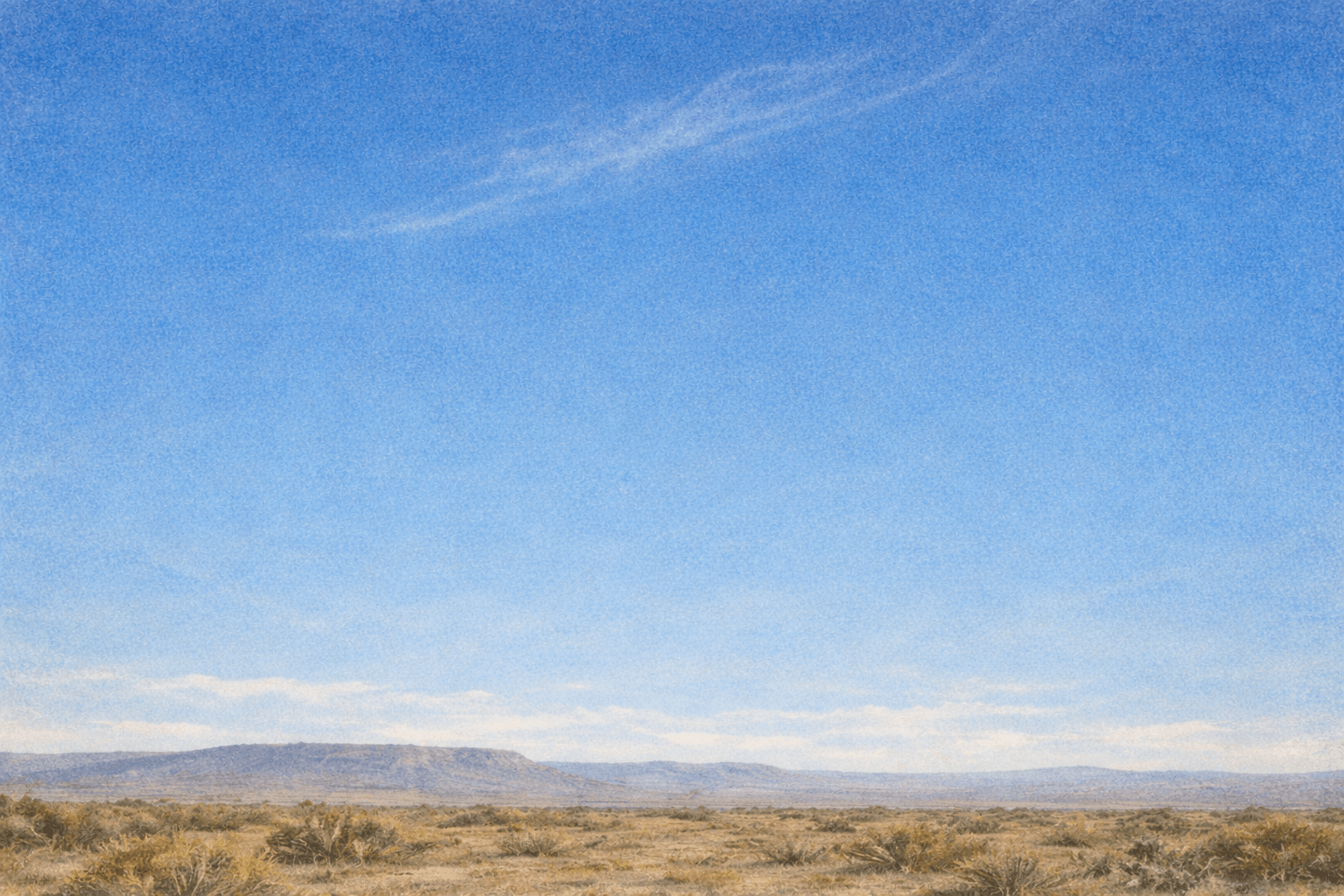
The sky knew first.
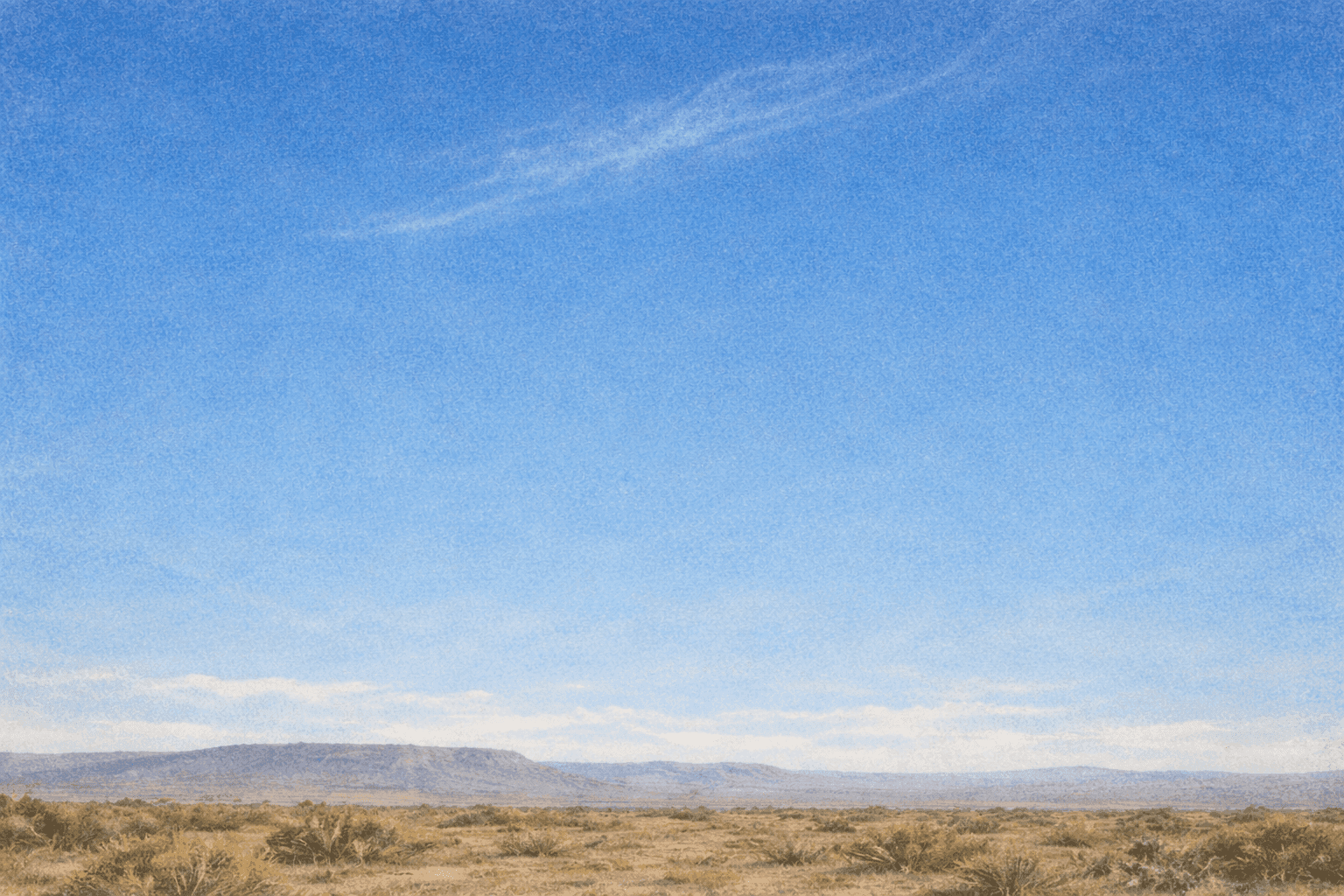
“The sky was still. La Conquistadora knew better.”
This is how the novel begins — with the sky as a character. Watchful. Knowing. Waiting.
The stillness is not peace. It is the stillness before something.
La Conquistadora is structured around a meteorological principle: a perfect storm is the rare convergence of ordinary forces into something none of them could have produced alone.
The novel’s weather is not background. It is architecture. Five chapter titles trace the storm from its first signs to its aftermath. The sky knows what’s coming before anyone on the ground does.
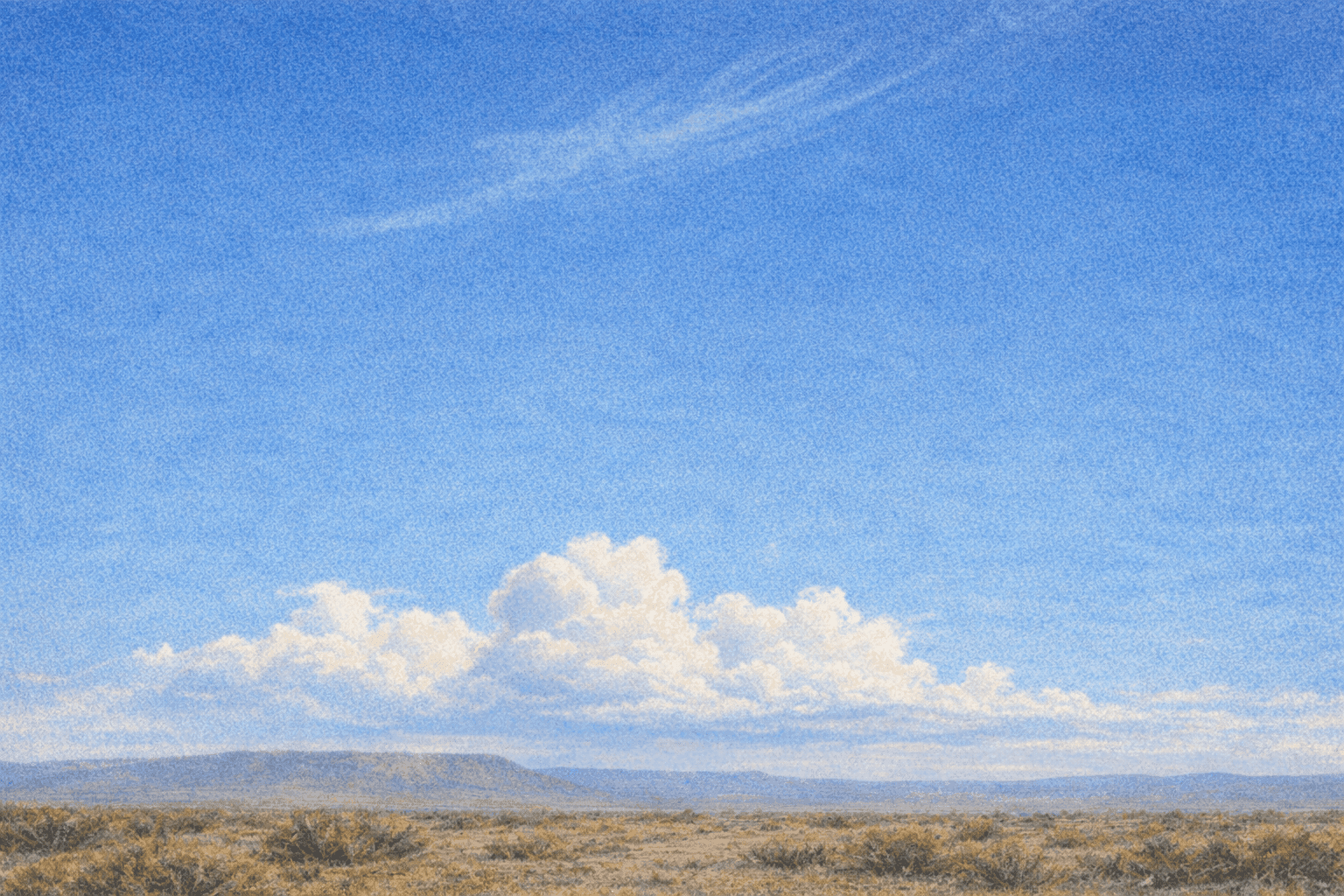
Adam walks his lame horse across the flats alone — the novel’s first moment of true solitude. He reads the sky the way some men read a newspaper. He thinks of Sophie holding her hair up off her neck. He thinks of Belgium, of the ice on his feet, of the war that never quite thaws.
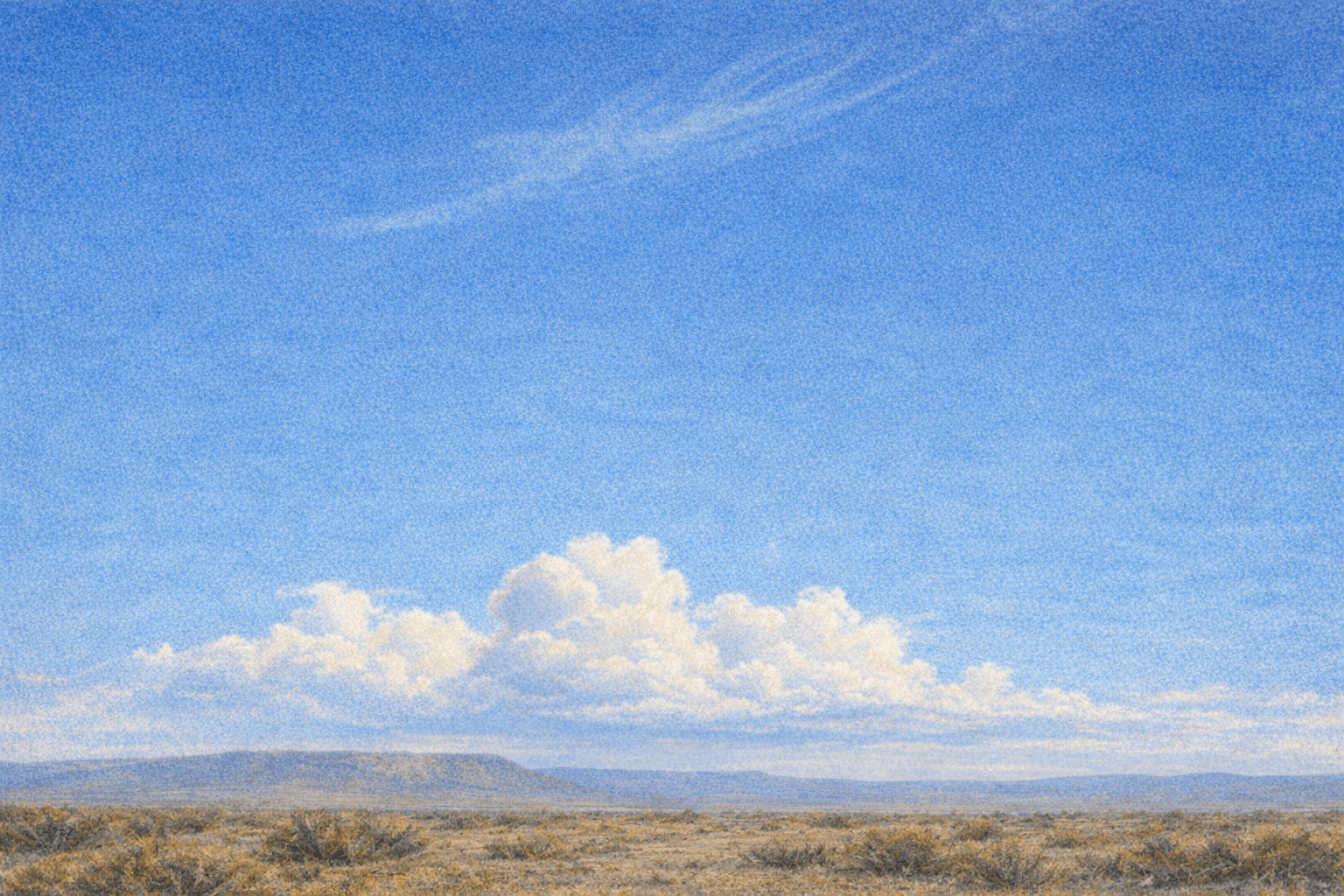
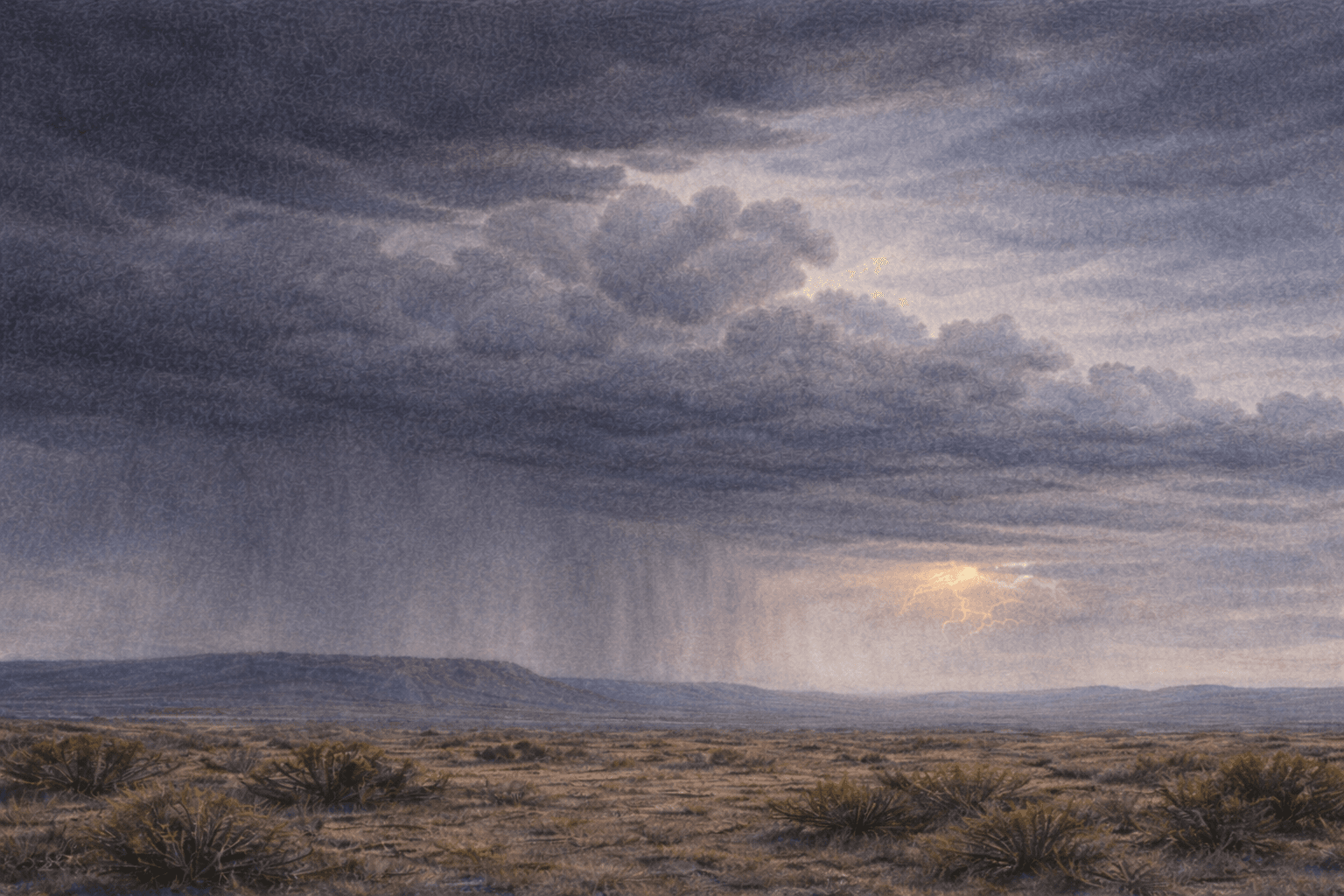
This is the first named chapter in the weather arc. “Distant Thunder” — the charge is building, but the storm is still someone else’s weather.
“The monsoons were coming. Not today. But soon.”
Book One, Chapter 8
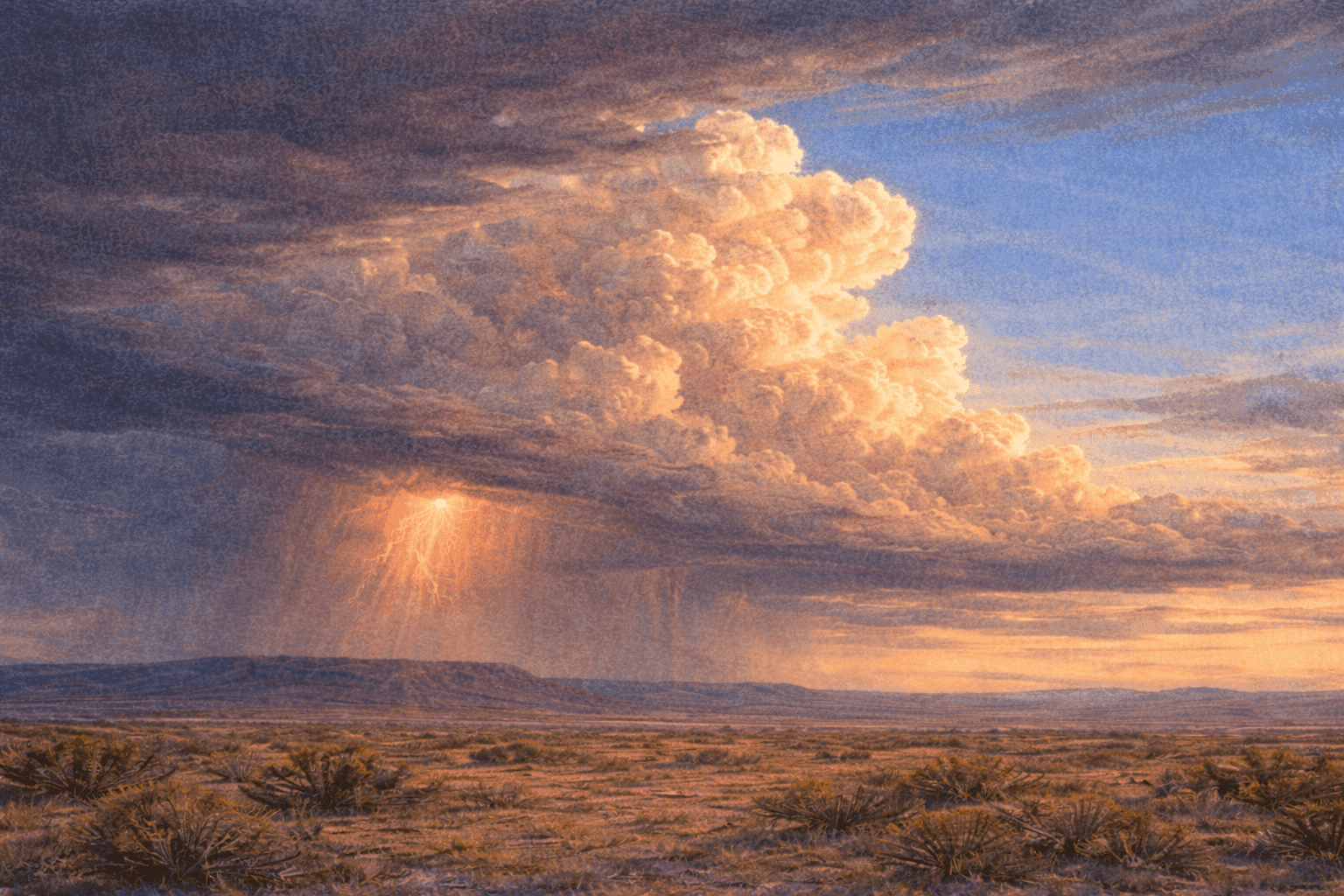
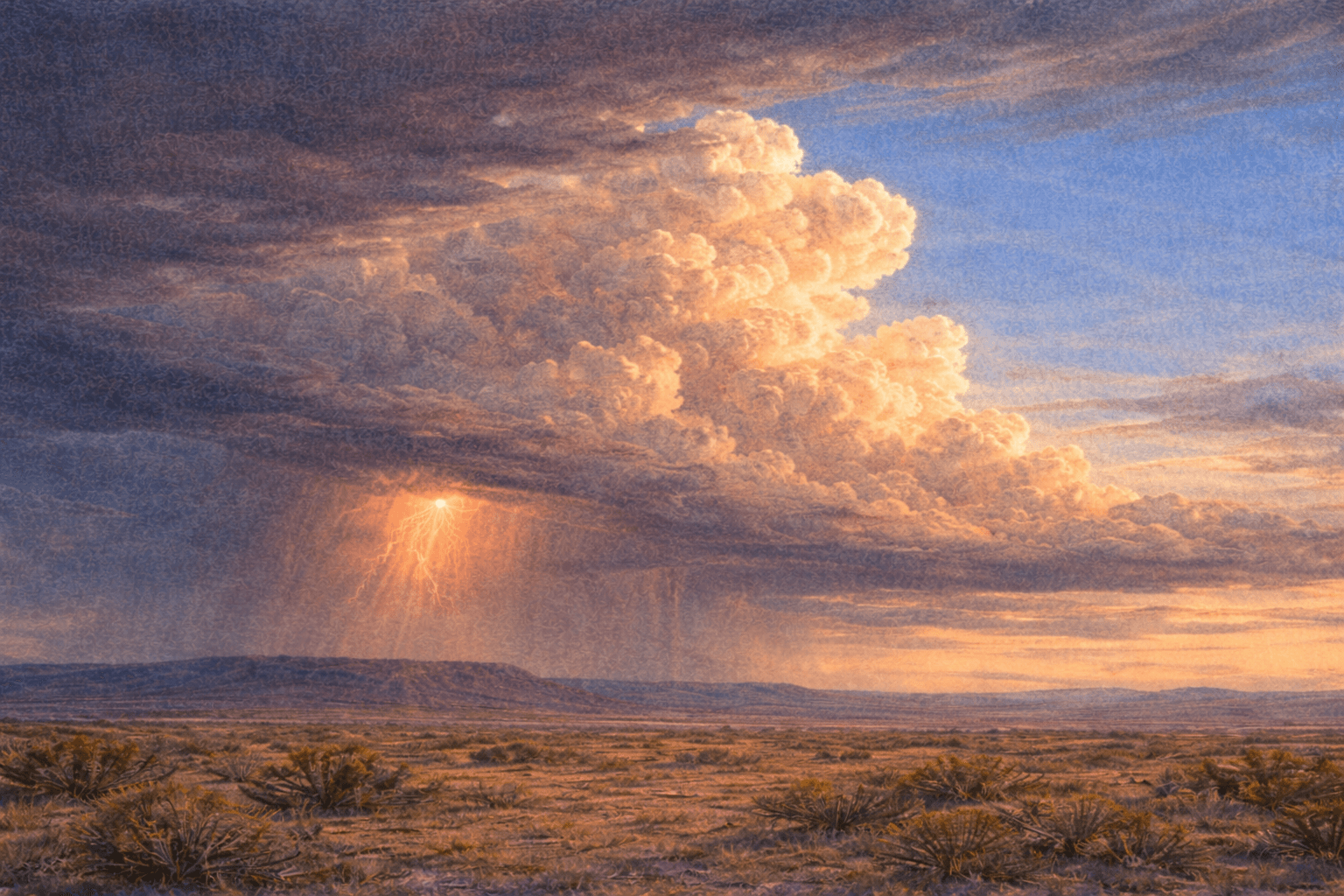
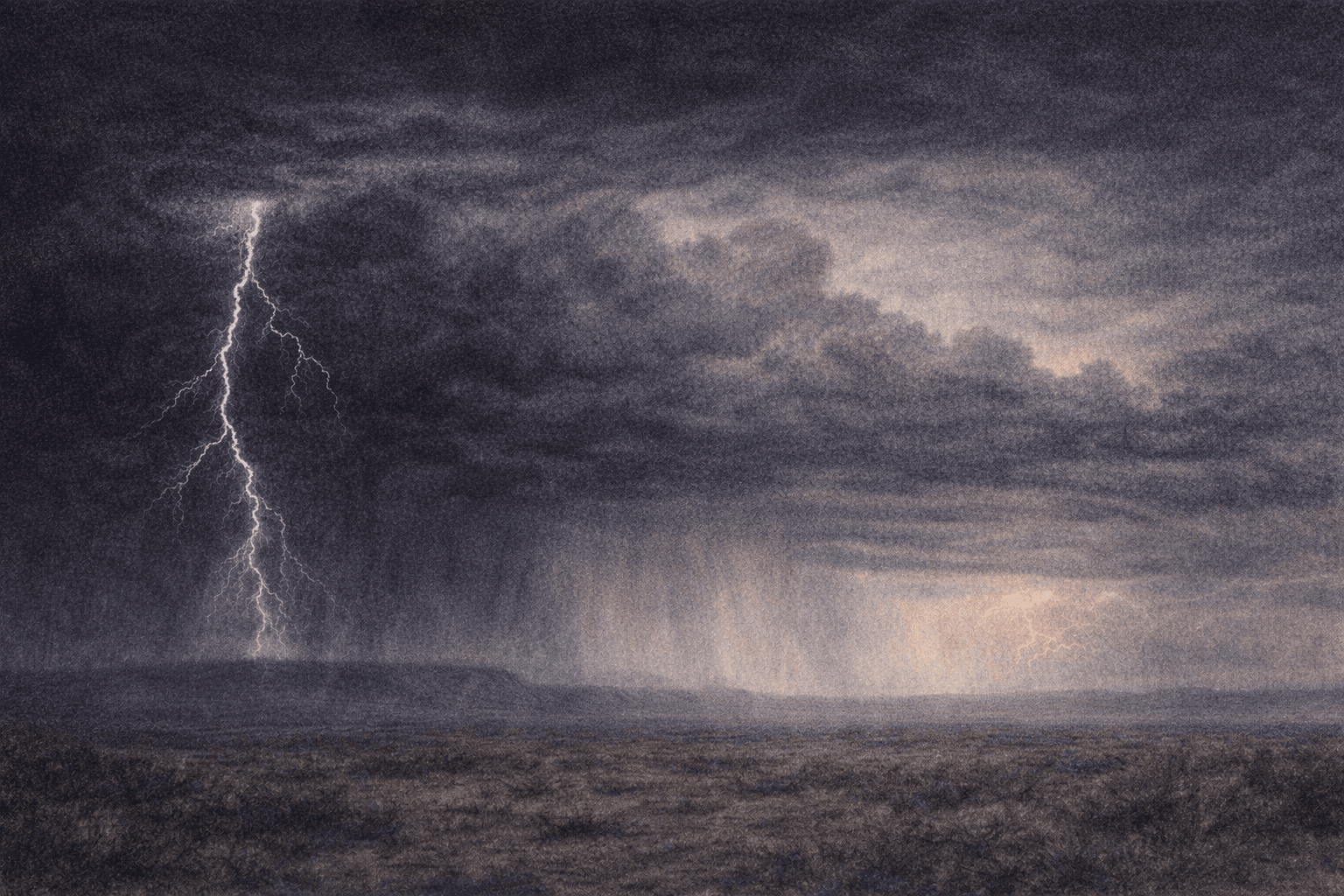
“The sky had changed since they’d gone inside. The clouds that had been building all afternoon were stacked high and dark now, and along the western horizon, heat lightning flickered silently across the flats.”
The VFW Hall dance in Clauson. Sophie in a black skirt and red blouse. Danny Parks dances with her first, then steps back for Adam. The waltz — his hand at the small of her back, warm and sure.
On the porch, the sky has changed. Heat lightning — light without consequence. The storm’s electrical charge building in the atmosphere, visible and dramatic, but not yet delivered.
The kiss. So close it could almost have been by accident. But the depth and length of it is no accident at all.
“Heat lightning is a promise. It tells you the energy is real. It does not tell you when it will arrive, or what it will cost.”
Book One, Chapter 11
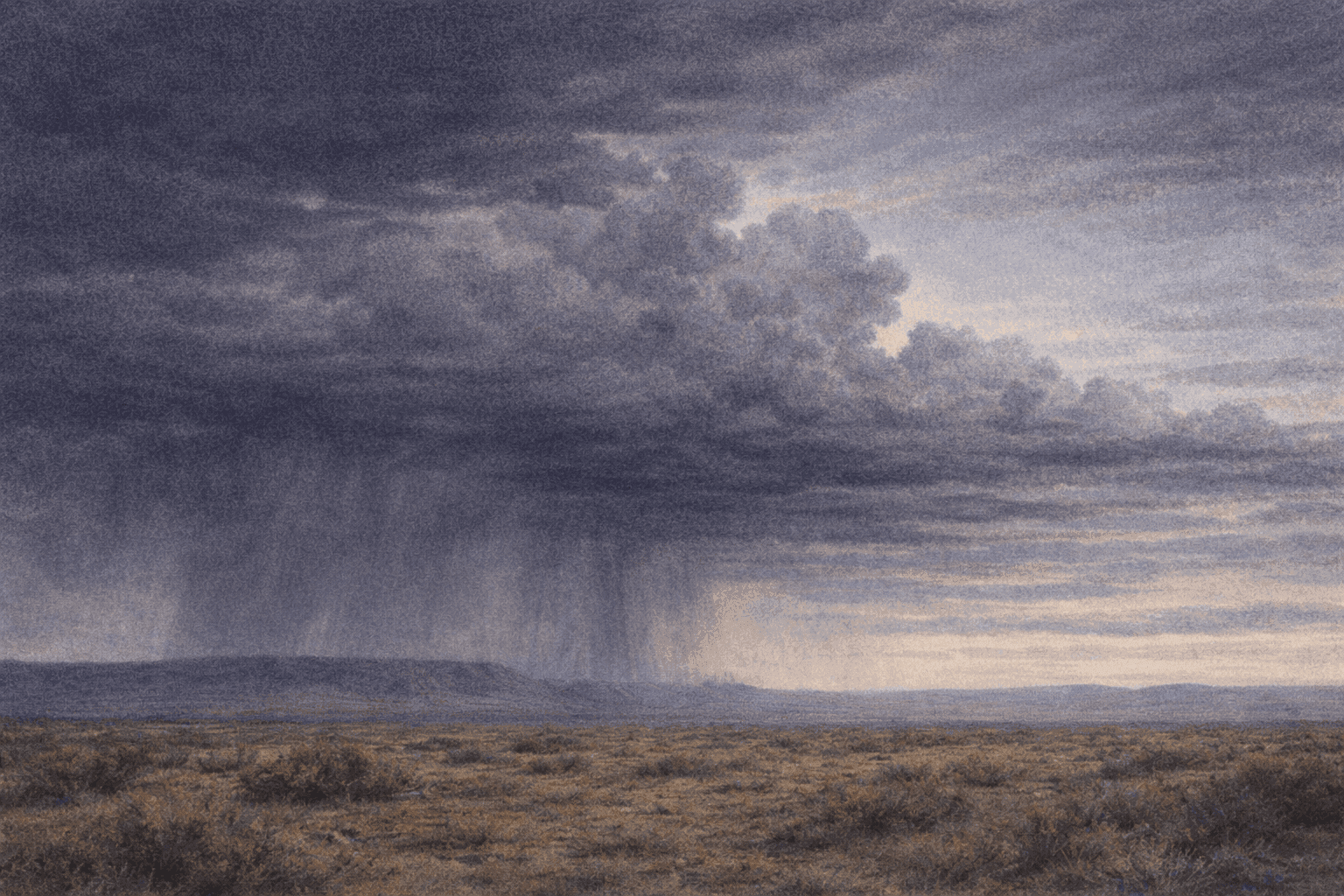
The monsoon breaks overnight. Rain hammers the camp. Toby calls a short drive. The clouds roll in fast — every cowboy turns toward camp.
And in the chaos, Laramie — Adam’s horse — flips on the wet ground. Adam is caught by the stirrup, dragged at full gallop across the range. He grabs the horse’s tail, seizes a loose rein, gets back in the saddle.
No one notices. He jokes it off. His back is injured.
The first storm is not the climax. It is the warning. These forces are real, and they have weight.
Book One, Chapter 15
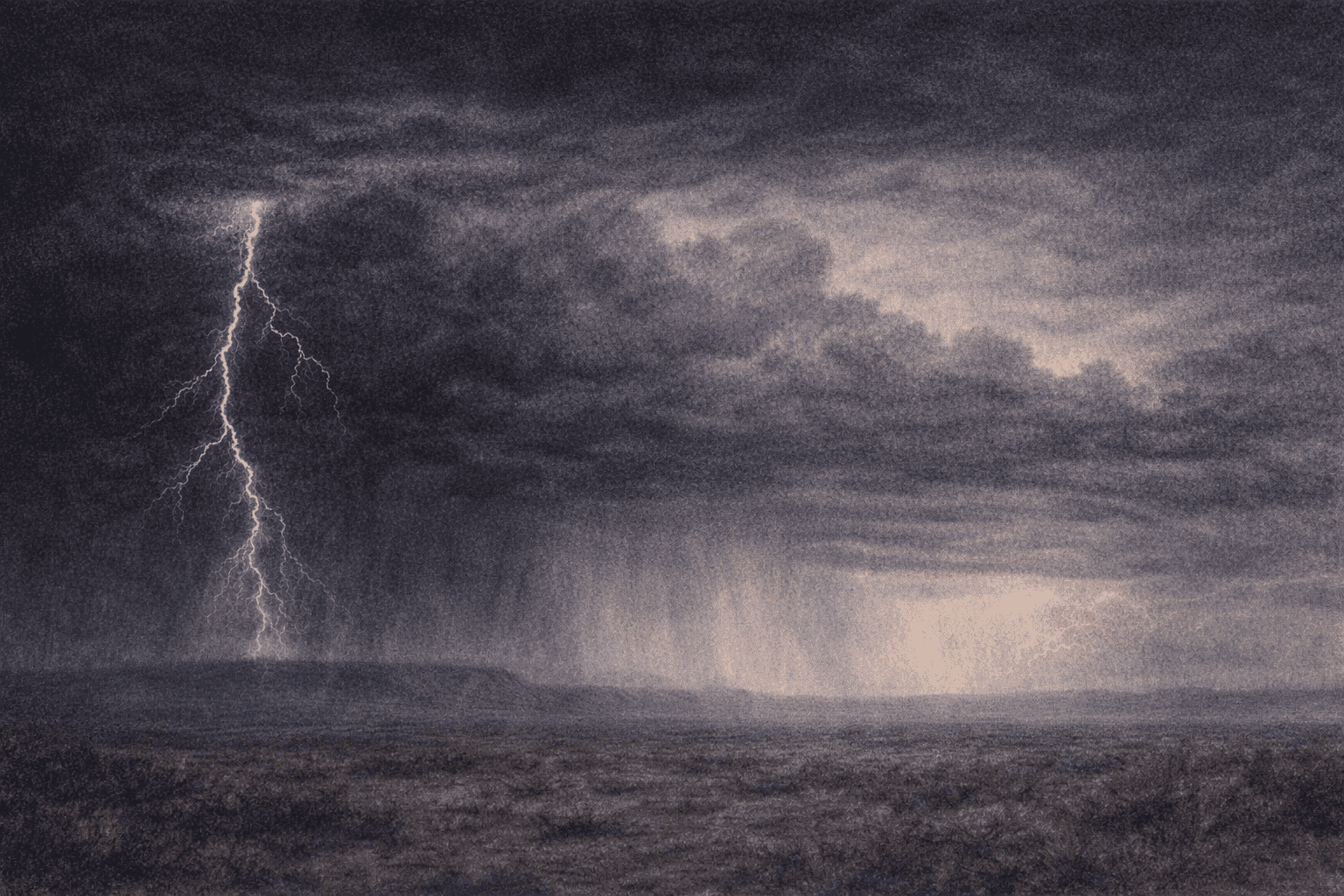
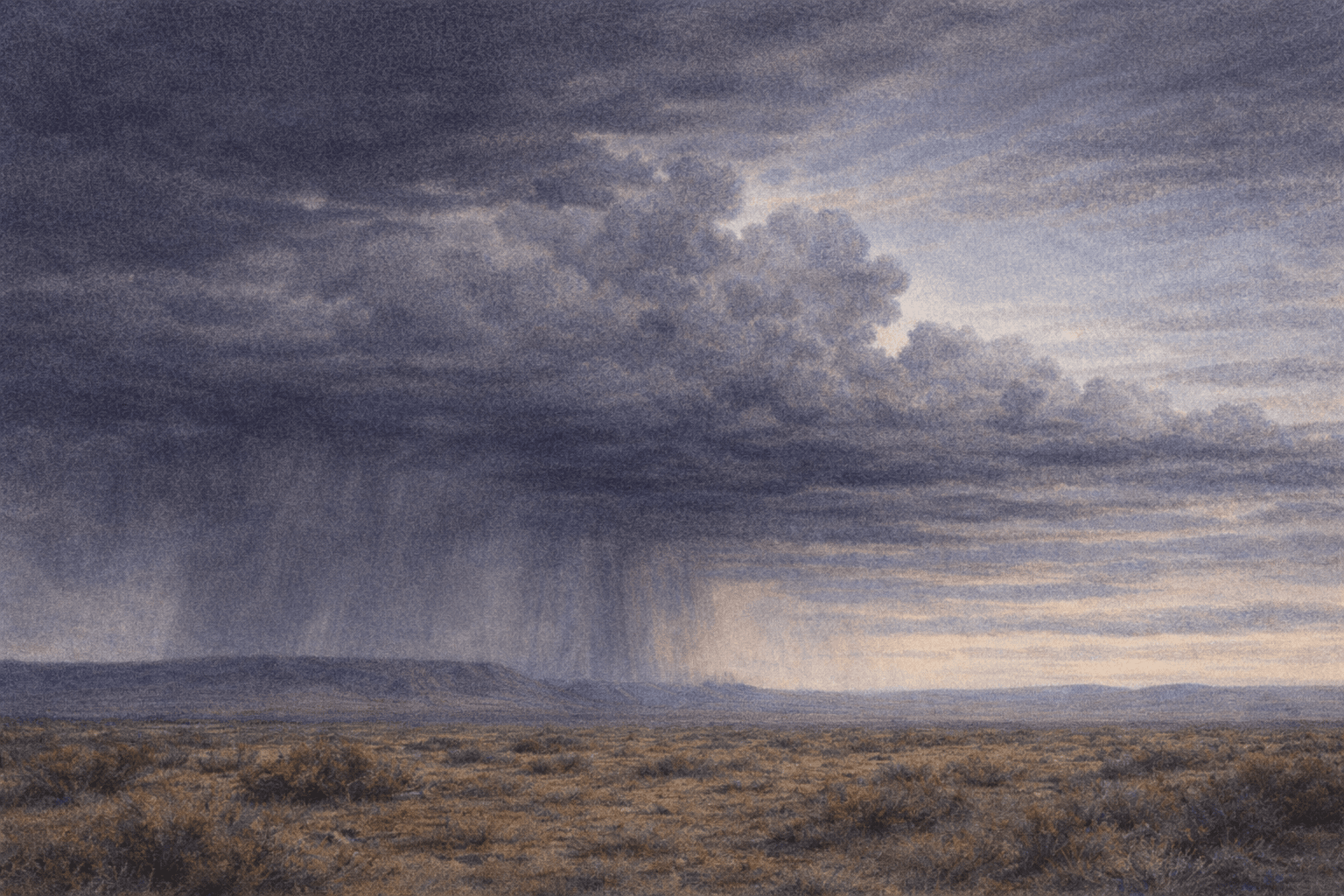
“The sky opened. The monsoon broke over La Conquistadora with a fury that rattled the thick adobe walls and drove the hands from the corrals to the shelter of the bunkhouse porch. Rain hammered the drive until there wasn’t a boot track or a tire track left in the gravel.”
The four forces converge simultaneously.
Love: Sophie has made her choice — she will go wherever Adam goes.
Family: Louisa says the unforgivable thing.
Class: Degarrin confronts Adam in the office. Adam puts his hat on — deliberate, in a house.
The land: The monsoon erases every trace.
“The monsoon takes no position. It simply erases.”
Book One, Chapter 21
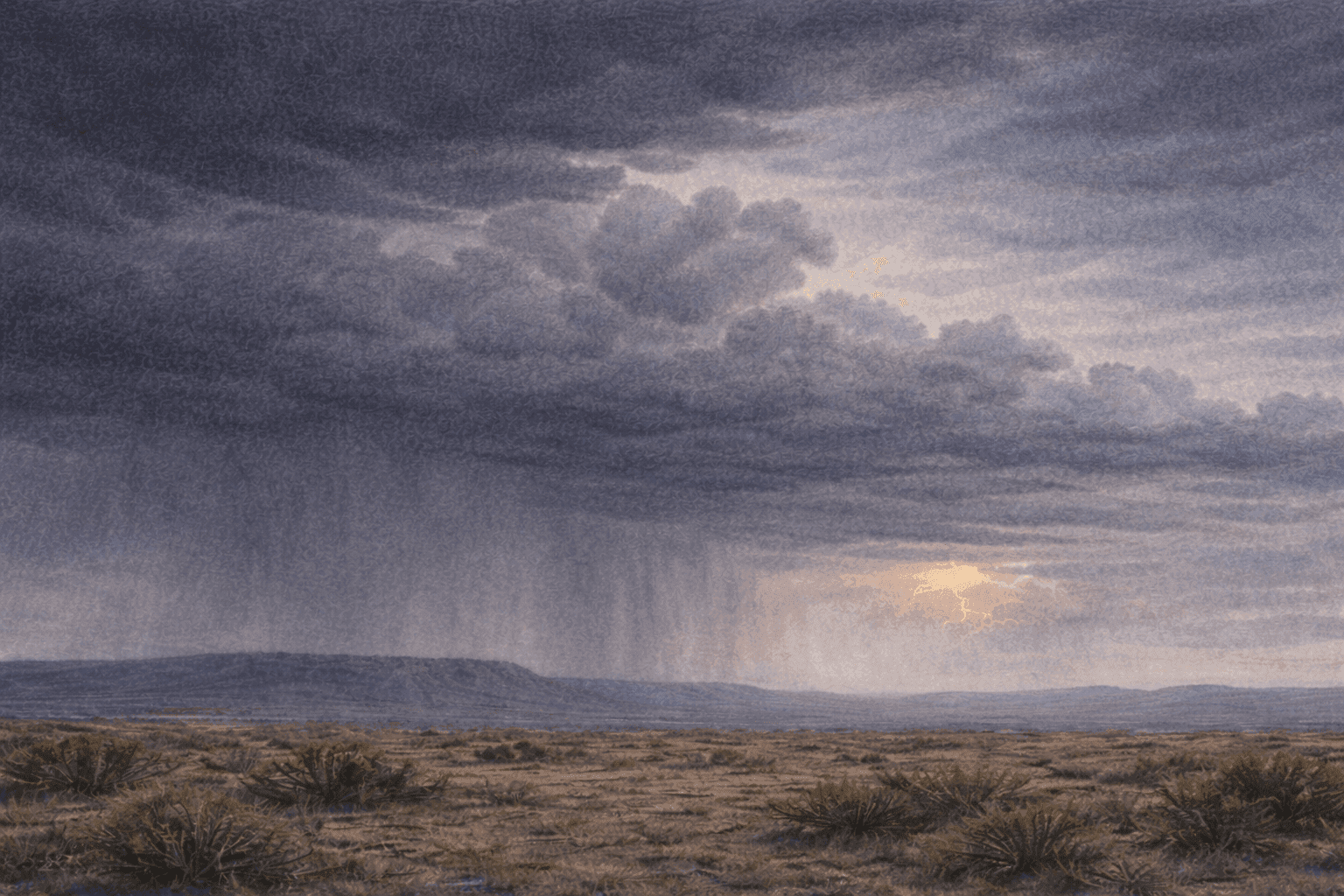
The monsoon is not a single storm. It is a season.
Sophie marries Joe Carpenter. Raises Kyle. Builds a life. Walks through it like a person who has misplaced something.
Adam wins championships. Marries twice. Travels every road between here and wherever he happens to be. Keeps Sophie in that quiet hour before sleep.
The land doesn’t care. The monsoon comes every summer. It has always come. The creeks run. The grass greens. The arroyos fill and empty and fill again.
“Twenty-three years. The same sky.”
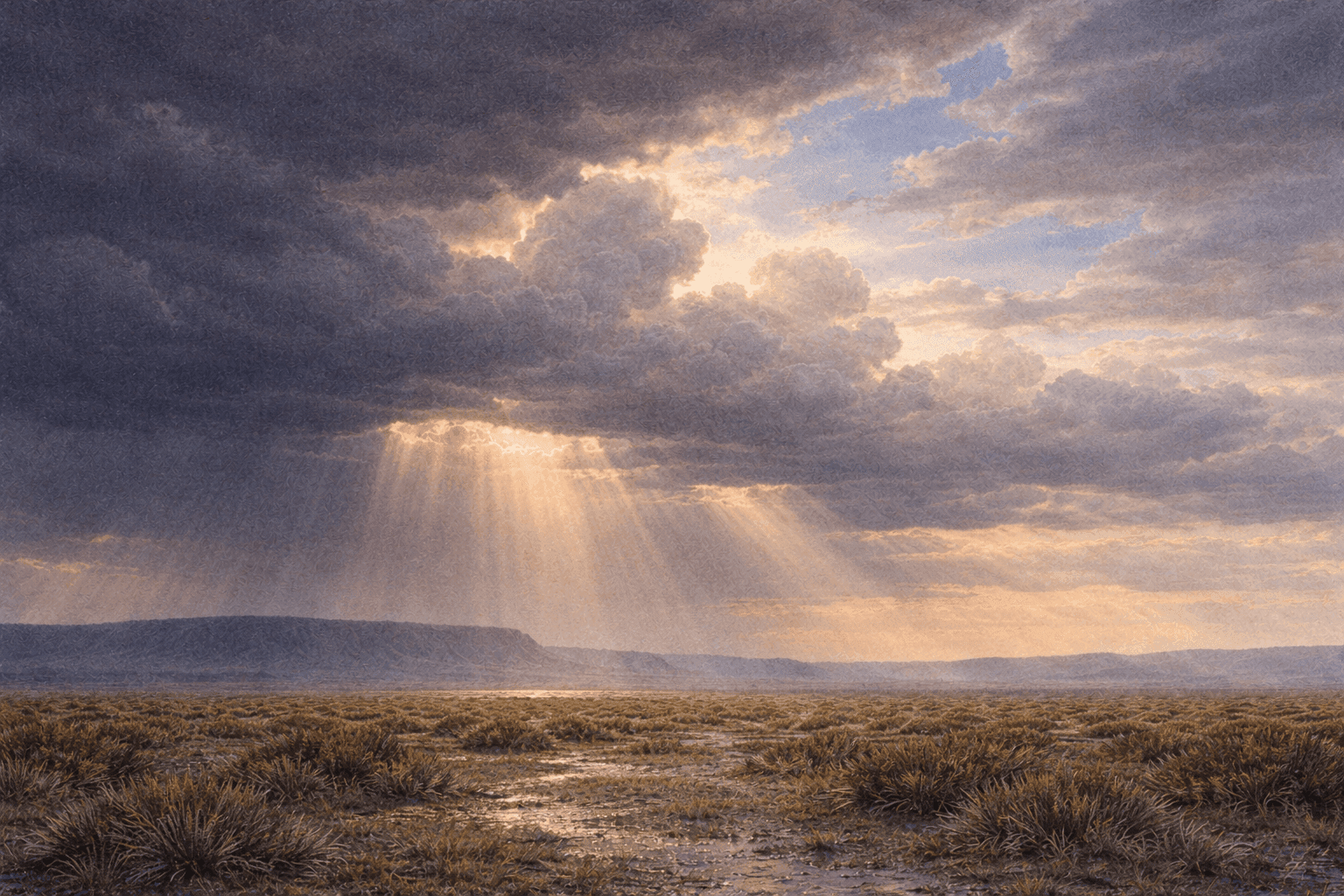
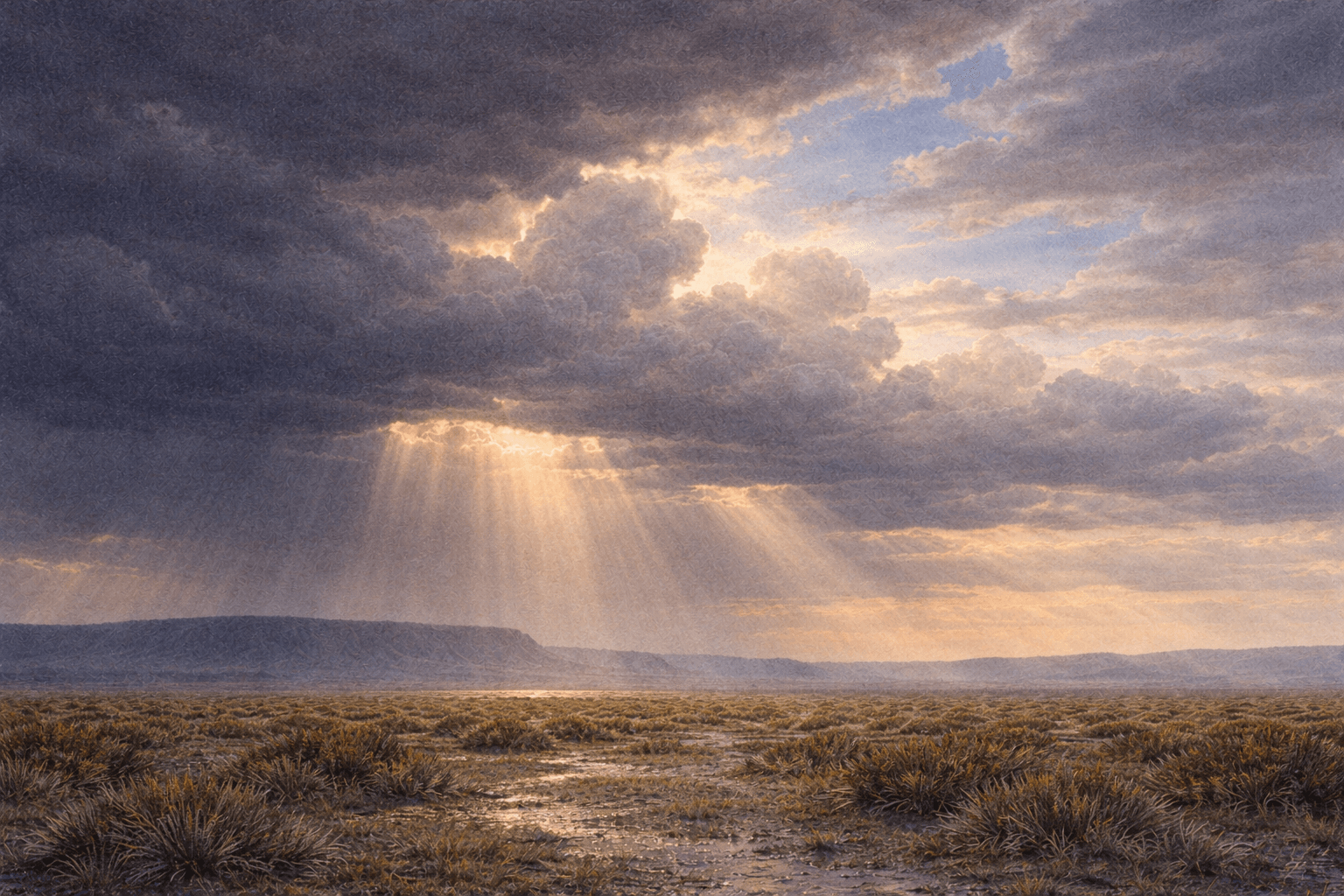
“The monsoon was a memory now, the arroyos quiet, the land washed clean and settling into the dry clarity of fall.”
Autumn. Three months since Sophie left.
Louisa drives alone to Indian Rock Mesa. She finds the map rock. She sits in the wind.
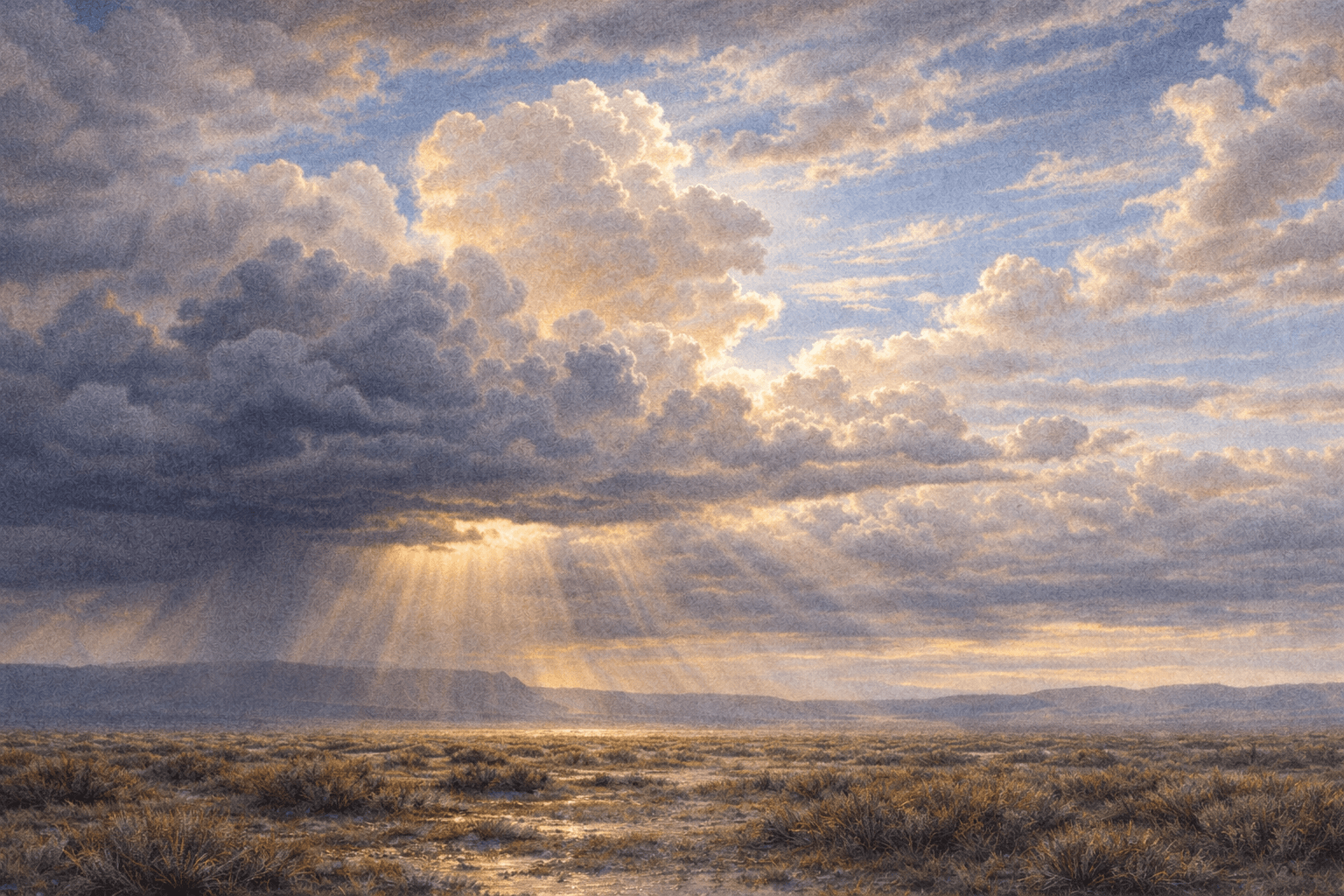
The clearing is not redemption. It is what comes after — the silence that follows the storm, the blue that replaces the grey, the quiet understanding that the weather has done what it was always going to do.
“I wonder if I was wrong about Adam… putting up with Adam, be he perfect or deplorable, would have been a lot better than not having Sophie anymore.”
Book One, Chapter 22
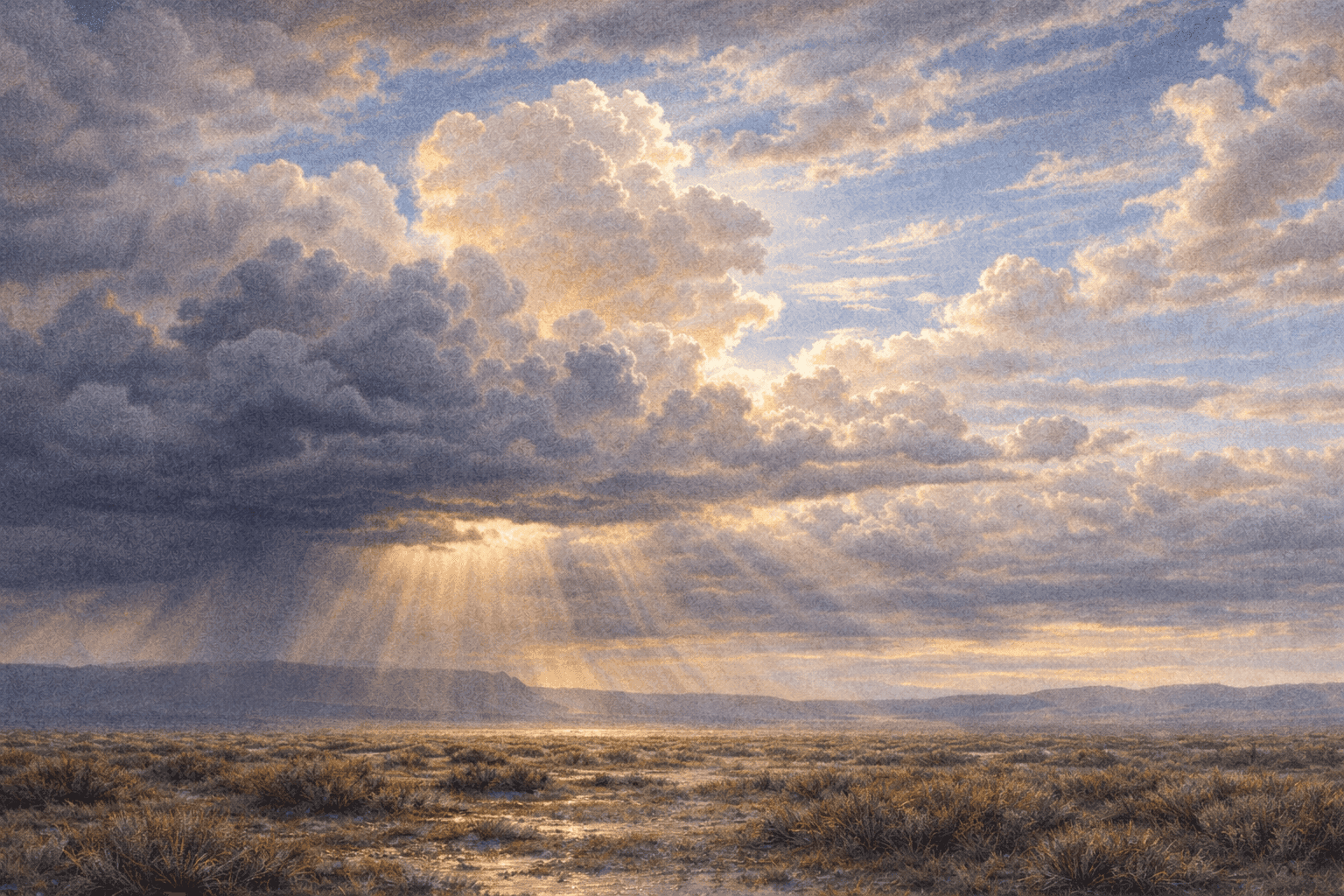
Twenty-three years later, Kyle Carpenter arrives at the ranch his mother left behind.
The weather in Book Two is compressed and volatile — as if the sky is trying to say everything it knows in the time that remains.
Because the time that remains is short. The Stillmores have found a buyer.
Adam comes back. Sophie drives across the plains. At a little house, the door opens.
“Sophie, girl! I thought I was dreaming.”
Book Two, 1969
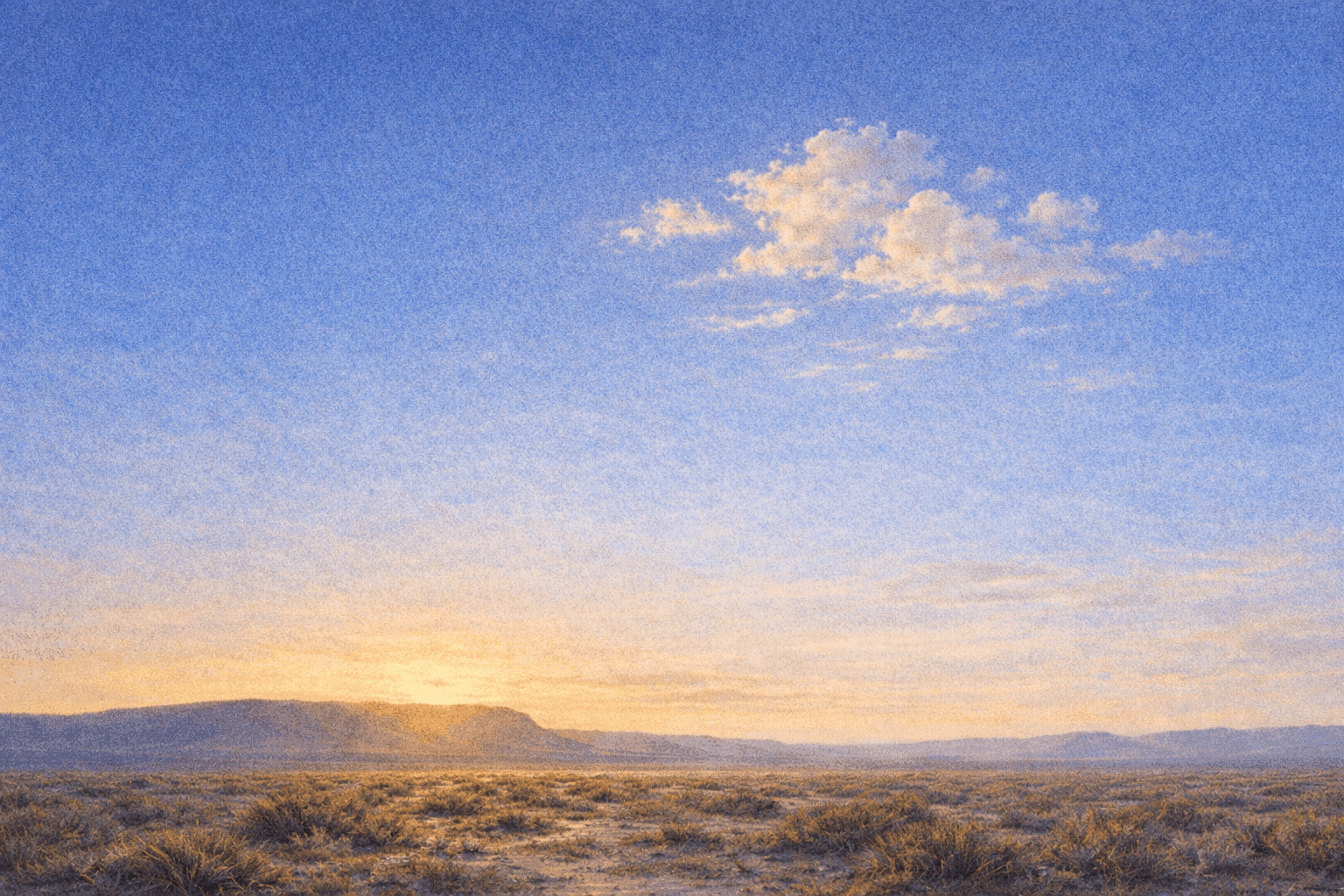
“The land did not grieve. The land did not remember. The land simply went on, beautiful and indifferent and unconquered, exactly as it had for millennia. That was its nature. That was its name.”
“The only thing that had ever changed it was the weather.”
The novel’s title does not refer to its human characters. It refers to the land.
The Spanish land grant named the ranch La Conquistadora — “The Conqueror” — and the irony is gentle and total. Everything that happens in these two books happens on land that owns itself. Love is born here, damaged here, and healed here. A family builds a life here and loses the right to it. A young cowboy is buried in the orchard. A champion is made on the road and returned, at the end, to the place that made him.
The petroglyphs on the rock faces. The Spanish inscription “Aqui estuvo” — someone was here. The arrowheads on the sand flats, washed clean by the rain and waiting to be found by whoever is paying attention.
The monsoon is the land’s most direct statement. It comes every summer. It has always come. It levels the human architecture of tracks and tire marks and plans and regrets. It fills the arroyos and runs the creeks and keeps the grass green. It is not kind and it is not cruel. It is simply what the sky does over this particular ground, in this particular season, because that is the nature of this place.
Adam Connor reads it and knows. The monsoons were coming. Not today. But soon.
He is always right.
The sky knew first. The land remembers.
Buy the Novel